Wednesday, January 11, 2017

acute calculus cholecystitis

new guidelines link (emergency surgery )

2016 WSES guidelines on acute calculous cholecystitis


https://wjes.biomedcentral.com/articles/10.1186/s13017-016-0082-5

adopted algorithm from the new guidelines


ACC: acute calculous cholecystitis; CBD: common bile duct; DLC: delayed laparoscopic cholecystectomy; ELC: early laparoscopic cholecystectomy; ERCP endoscopic retrograde cholangiopancreateography; EUS: endoscopic ultrasound; IOC: intraoperative cholangiography; LUS: laparoscopic ultrasound; MRCP magnetic resonance cholangiopancreatography

Tuesday, January 10, 2017

calculation of sulfamethoxazole -trimethoprim dose in PCP (simple way)

Recommended dose based on trimethoprim 15-20 mg/kg

  1. 20mg (trimethoprim)X body weight = dose / day
  2. 20Xwt/80 = bottles /day
  3. 20X wt/80/4 = bottle/day
  4. bottle/day / 480 = dose/6hrs
off course not the above one but see next,

Simply , mathematically

Wt X 30 = dose/6hrs 
then round to nearest figure to avoid wasting bottles = 1440 mg, 1920 mg, 2300 mg /6 hrs

Indication for surgical intervention in head truama

Epidural hematoma :

  1. hematoma larger than 30 ml
  2. midline shift >= 5 mm  
Subdural hematoma (serious and worse)
i-regardless GCS
  1. hematoma larger than 1 cm
  2. midline shift >=5 mm 
ii-all patients with GCS less than 9 , hematoma should be evacuated and ICP monitor be instituted.

iii- if GCS > 9 and SDH < 10mm and midline shift < 5mm , surgery is indicated if 
  • GCS drops by 2 points
  • new development of assymetric or dilated fixed pupils
  • ICP> 20
ICH
  • more than 50 ml volume and less than 85 ml
  • Patients with GCS 6-8, with frontal or temporal lesion volume > 20cc with midline shift >5mm or cisternal compression.


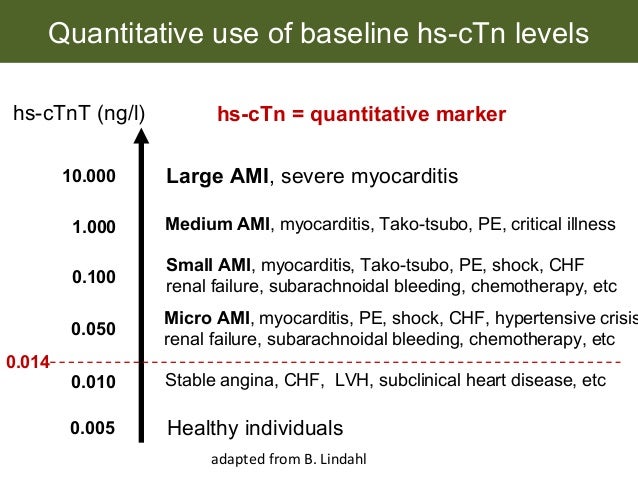
Non Ischemic High Troponin associated conditions

Notes about troponin in ICU

Heart related

  1. Arryhythmia.
  2. aortic dissiction
  3. coronary vasospasm
  4. cardiomyopathy
  5. contusion
  6. chemotherapy
  7. takotsubo cardiomypathy
  8. myocaditis
  9. pericarditis
Plumonary related
  1. PE
  2. pulmonary hypertension
Others
Neurological catastrophe , chronic renal failure.
-------------------------------------------------------------------------
Troponin has poor prognostic potential except in critically ill patients where the mortality is 2.5 higher with longer ICU length of stay.
Chronic renal failure patients with higher troponin (TnT>> TnI) have poorer outcome.

Tuesday, July 16, 2013

Acid Base interpretation as easy as possible


I will try to simplfy the acid base interpretation as easy as I can.
then we'll post some cases and questions. (Adel Hammodi)

Tuesday, July 9, 2013

How to improve your odds for easier endotracheal intubation in intensive care unit

HOW TO IMPROVE YOUR ODDS FOR EASIER ENDOTRACHEAL INTUBATION


Intubation in critical care areas (outside the OR) is by default is considered as difficult. I think to reduce the possibility of facing difficult intubation or ventilation situations ,we must train our colleagues the best and proper way of intubation in the beginning.
this is some ideas for better odds for intubation:
  1. Tips of fingers:
    use your tips of fingers to carry the laryngoscope and the tube. using the tips of fingers will help you to control and sense well every movement of the instruments also helping less trauma of the delicate mucosa.
  2. Decrease your nerve and temper:
    yes it is stressful emergent situation to intubate critically ill patient but if you remember that your action well be better with calm behaviour and you will do better with quiet nerve . as you know , endogenous epinephrine induces muscle tension and it will increase your hand tremors.
  3. Use best position of head ,neck and all body position:
    do your best to adjust your position and the patient position head extension , neck flexion ,ear to sternum position ,and other proper positions to improve visualisation of the glottis.
  4. Start at the right angle of the mouth:
    open the mouth widely and start at the right angle of the mouth take the whole tongue to the left don't let a piece of the tongue obstruct your way to view the glottis.
  5. Hold the tube at its end:
    don't hold the tube at its shaft it will obstruct your view on advancing it. start at the angle of the mouth so the view still wide and clear and use the tube curve to guide itself into the glottis don't try reposition inside the mouth as the field will be narrower and the teeth will not allow redirection.

    hope to get benefit from this note

    thanks